THE HISTORY OF THE PROJECT
The SF Irish Famine Memorial began with a simple idea: the story of An Gorta Mór, the Great Hunger, should have a permanent place of remembrance in San Francisco and the American West.
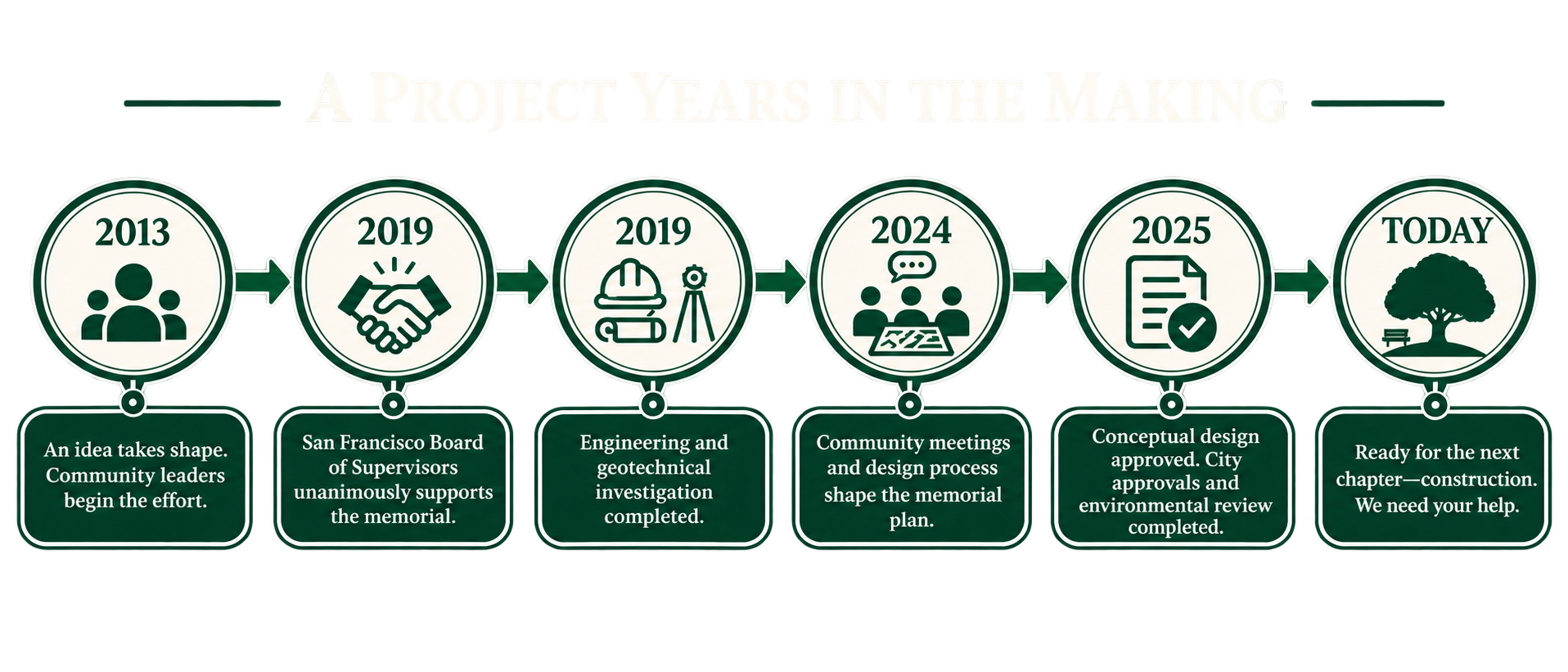
What began as a community idea in 2013 has grown through more than a decade of volunteer work, design, engineering, public engagement, and City review.
2013 — THE IDEA TAKES SHAPE
Local activists George Trainor and Kenny Stock approached then-Consul General of Ireland Gerry Staunton with the idea of creating a permanent Irish Famine memorial in San Francisco.
Consul General Staunton brought together Irish and Irish American community leaders to discuss how the idea could become a reality.
From those early conversations came a clear purpose: remember the victims and survivors of An Gorta Mór, tell the story of those who emigrated, and recognize the welcome and opportunity many Irish people found in San Francisco, California, and the American West.
A COMMUNITY EFFORT BEGINS
A group of community leaders, donors, and volunteers stepped forward to move the project forward.
Among those involved in the early years were Margaret McPeake, Áine Brolly, Hillary Flynn, Diarmuid Philpott, and Pat Uniacke, a County Galway emigrant and San Francisco building contractor who now serves as Chair of the SF Irish Famine Memorial Committee.
Many others have contributed time, expertise, and support as the project has developed.
FINDING THE RIGHT PLACE
One of the first major challenges was finding a location worthy of the story.
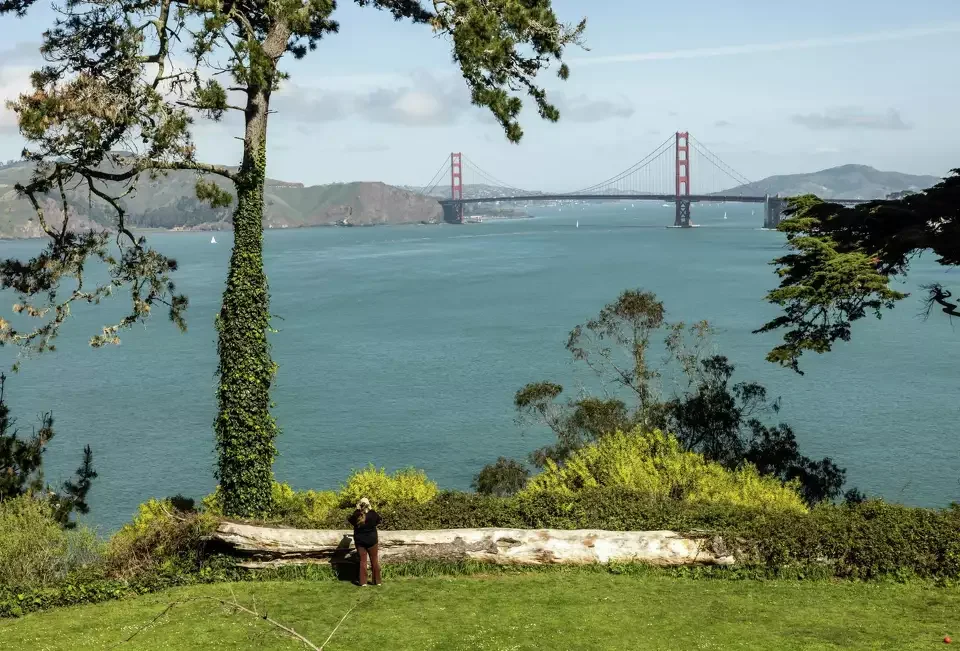
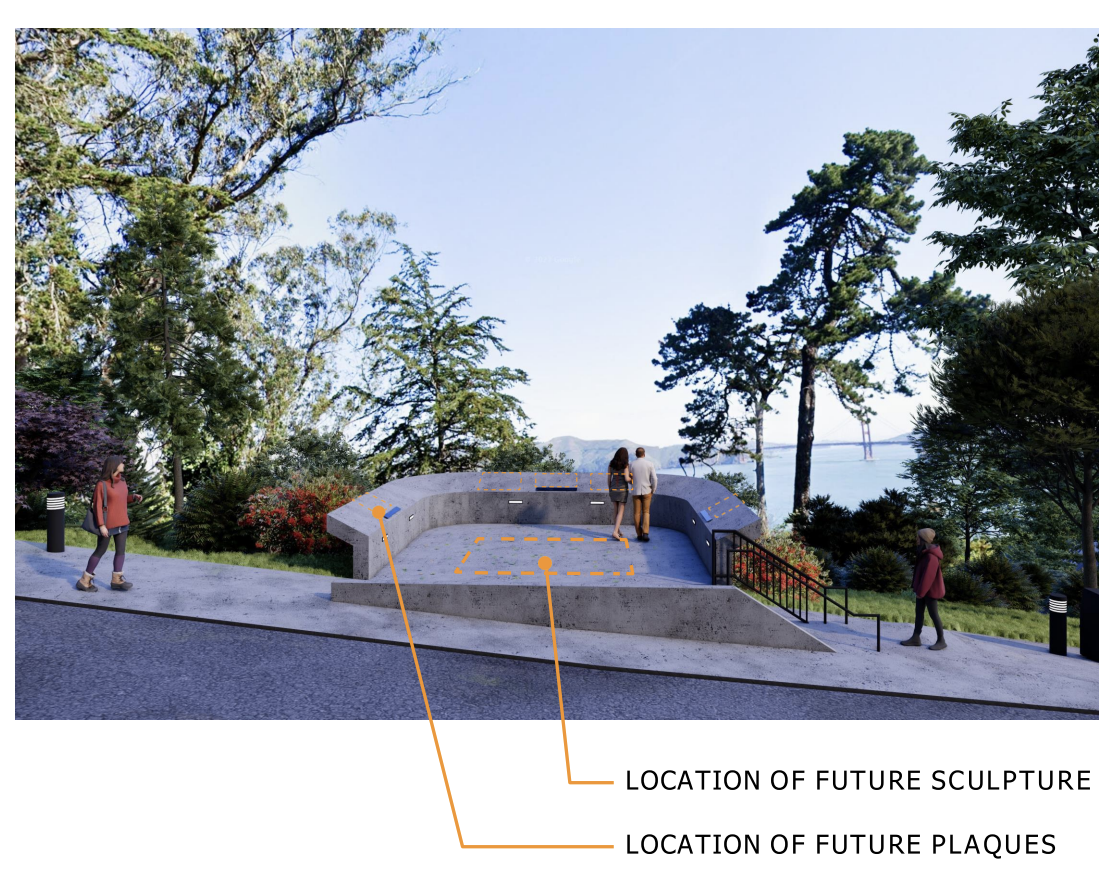
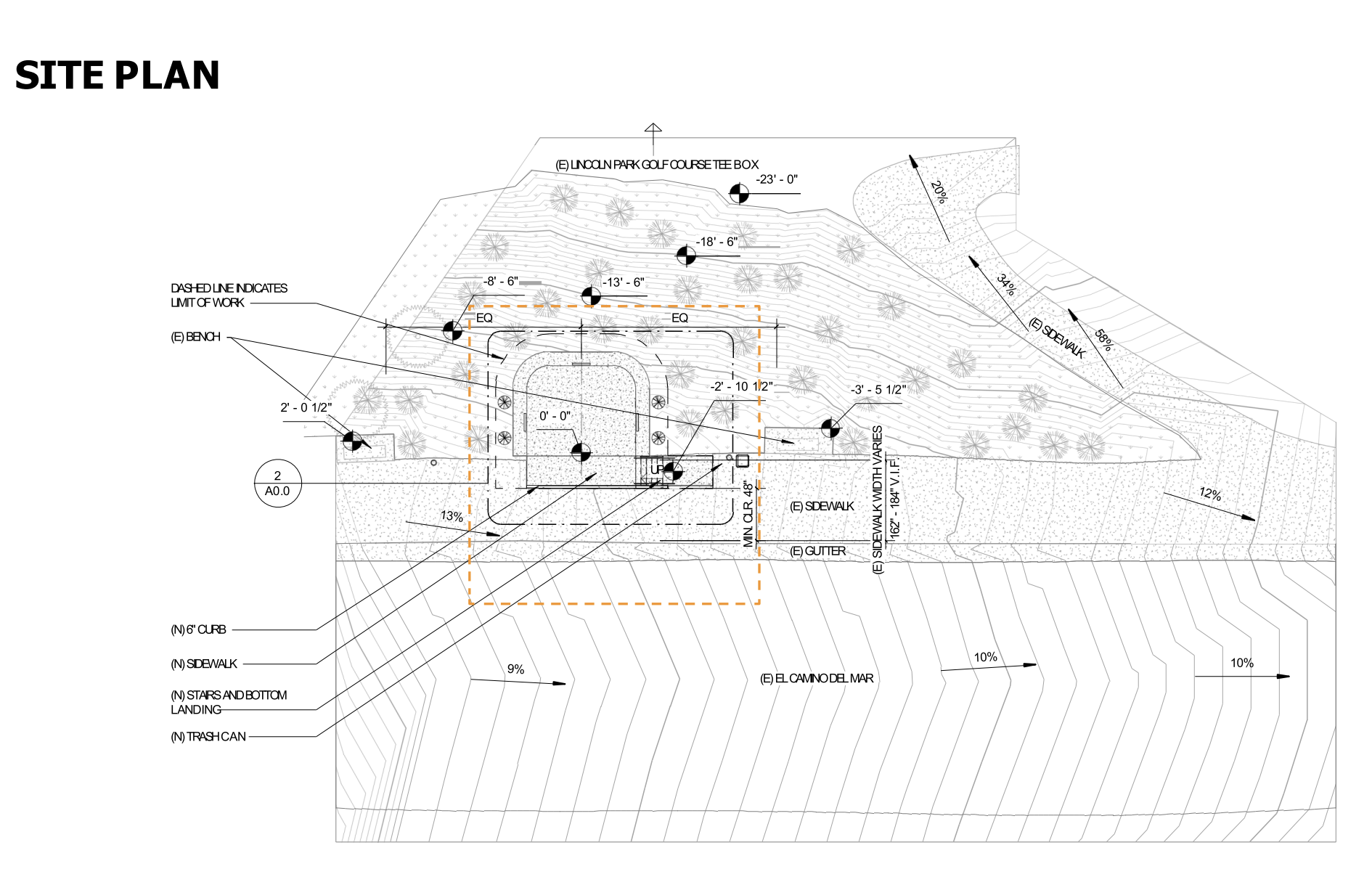
Working with the San Francisco Recreation and Park Department and other City agencies, the committee considered potential sites before focusing on an overlook along El Camino Del Mar in Lincoln Park, near the Legion of Honor.
The setting offers views toward the Pacific, Marin Headlands, and Golden Gate Bridge. It is a place that naturally invites reflection and provides a powerful connection to the journey from Ireland to the western edge of America.
2019 — SAN FRANCISCO VOICES ITS SUPPORT
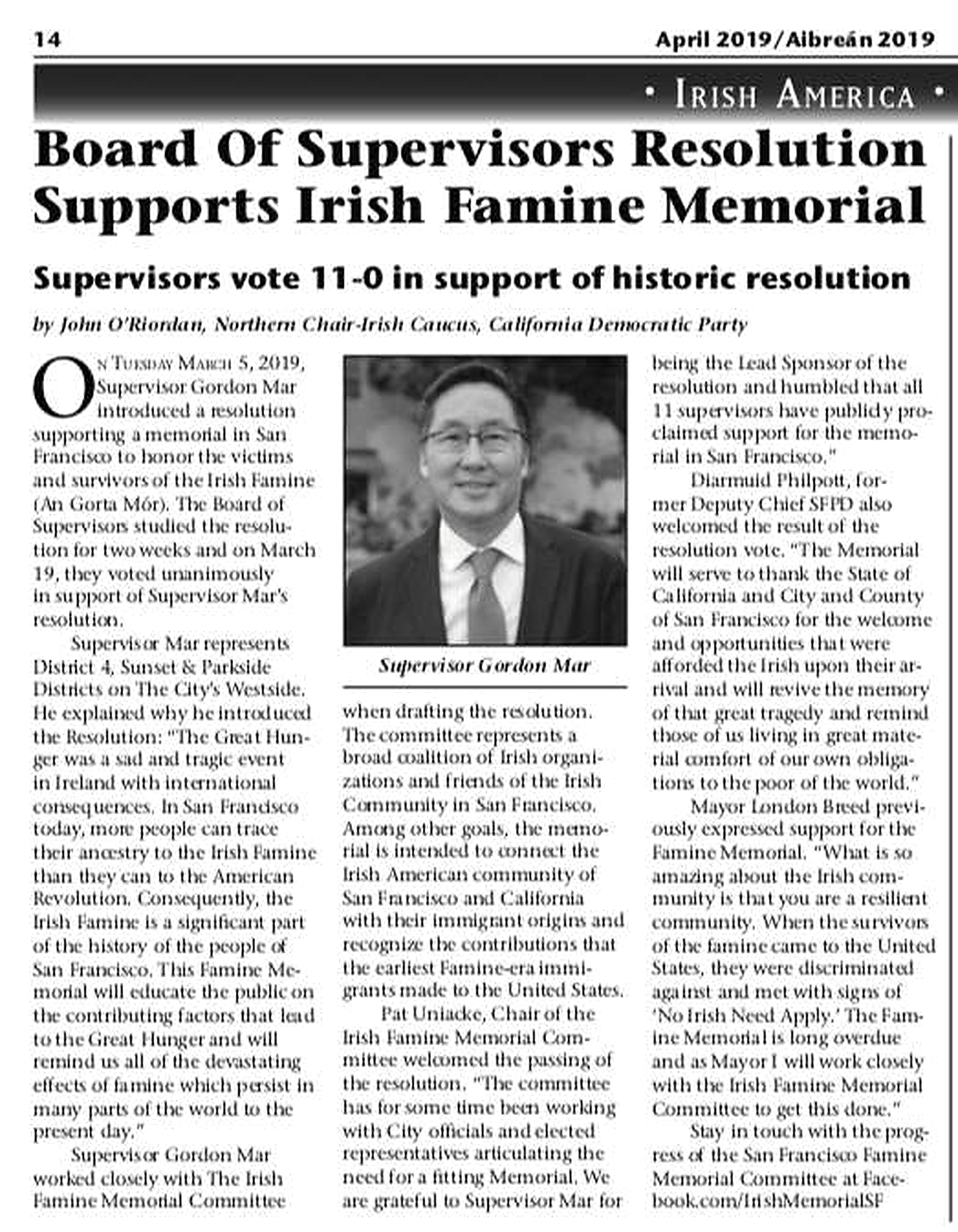
In 2019, the San Francisco Board of Supervisors unanimously supported the creation of a permanent Irish Famine memorial.
That same year, the project moved into detailed site work, including a professional geotechnical investigation of the proposed Lincoln Park location.
This was an important step. The memorial was moving from an idea toward a real public project.
2023 — GREAT FAMINE VOICES: SAN FRANCISCO
In 2023, Great Famine Voices San Francisco explored the story of Famine-era Irish emigrants and their lasting impact on the city.
The film is led by Myles Dungan, historian, author, and presenter of RTÉ Radio 1’s The History Show, and Glen Gendzel, Professor of History at San José State University.
Together, they examine Irish contributions to San Francisco, the 1906 earthquake and fire, and some of the more complicated parts of the community’s history.
2024 — THE DESIGN GOES BEFORE THE COMMUNITY
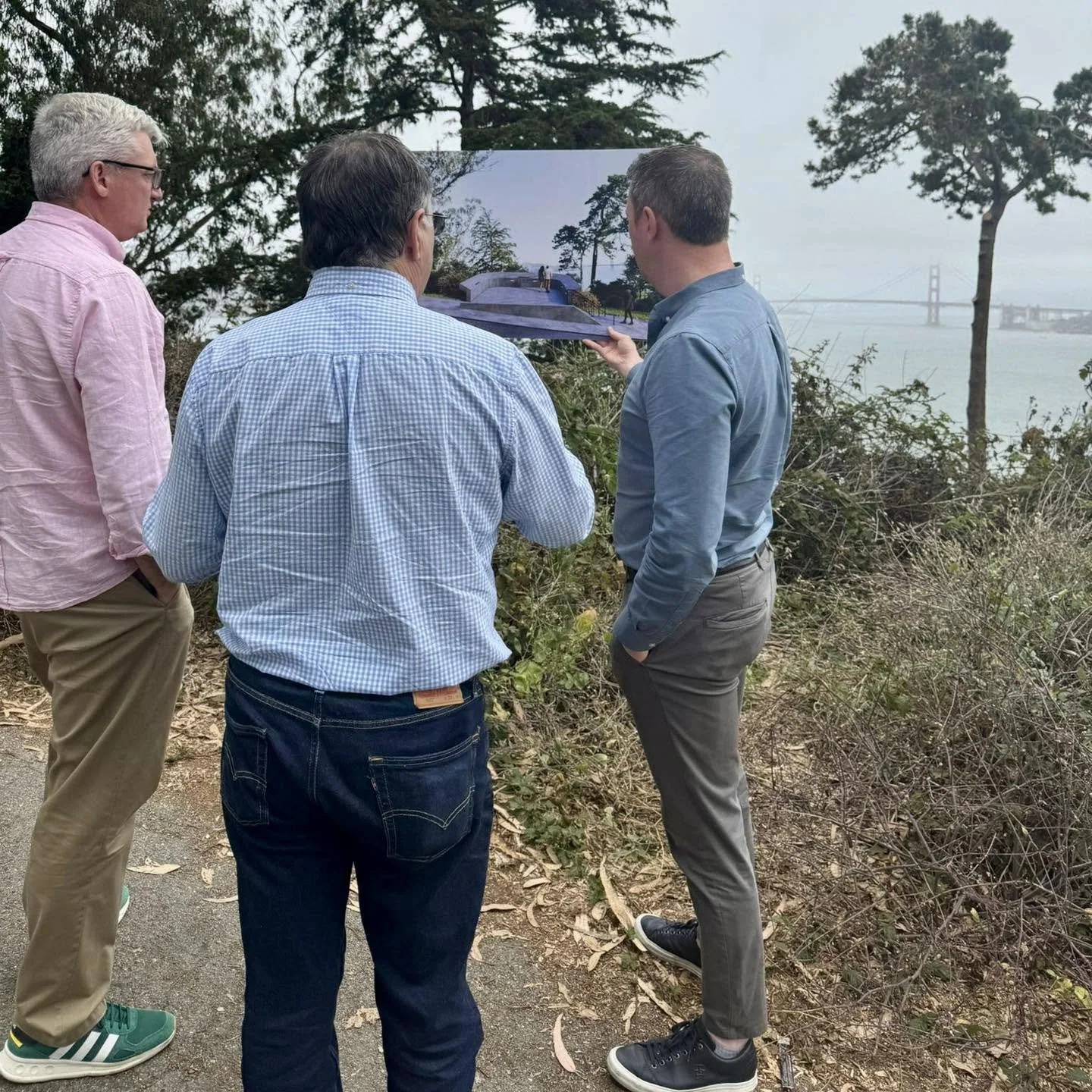
The project continued to develop through design work and consultation with the City.
In November 2024, the San Francisco Recreation and Park Department, the project team, and community representatives held a public meeting to present the proposed memorial plaza and receive community feedback.
The emerging design envisioned a contemplative overlook with historical storytelling, landscaping, lighting, and space for future memorial artwork.
2025 — MAJOR CITY MILESTONES
In 2025, the project reached several important milestones.
The memorial completed key environmental and historic-site reviews, and the San Francisco Recreation and Park Commission approved the conceptual design and the official name:
San Francisco Irish Famine Memorial
The City documents envision the project being completed in two phases, beginning with construction of the memorial plaza and followed by commissioned public artwork and expanded historical interpretation.
TODAY — READY FOR THE NEXT CHAPTER
More than a decade of work has brought the SF Irish Famine Memorial from an idea to an approved project with a defined location, developed design, engineering work, and significant City review behind it.
The next major challenge is funding construction.
The work of earlier generations of volunteers brought the memorial this far. Now the broader community has an opportunity to help finish what they started.